In today’s competitive business environment, operational efficiency is no longer optional—it’s a necessity. Companies face increasing pressure to deliver products faster, reduce costs, and ensure reliability. At the heart of achieving these goals lies the supply chain, a complex network of suppliers, manufacturers, warehouses, and transportation systems. Optimizing supply chain efficiency is essential for companies seeking growth, profitability, and customer satisfaction.
At Flex Logistics Solutions, we specialize in providing innovative logistics solutions that empower businesses to streamline their operations, reduce costs, and improve overall performance. By leveraging technology, strategic partnerships, and adaptable logistics strategies, we help companies enhance their supply chain efficiency from end to end.
Understanding Supply Chain Efficiency
Supply chain efficiency refers to the ability of a business to deliver goods to customers quickly, cost-effectively, and reliably while minimizing waste and resource usage. A highly efficient supply chain balances speed, cost, and quality to meet market demands effectively.
Key indicators of supply chain efficiency include:
- Shorter lead times and faster delivery
- Reduced operational and transportation costs
- Higher customer satisfaction and retention
- Optimized inventory levels with minimal waste
Inefficiencies in the supply chain, such as delays, miscommunication, or excess inventory, can lead to increased costs and missed opportunities. Businesses must adopt strategies that allow them to be agile, responsive, and cost-effective.
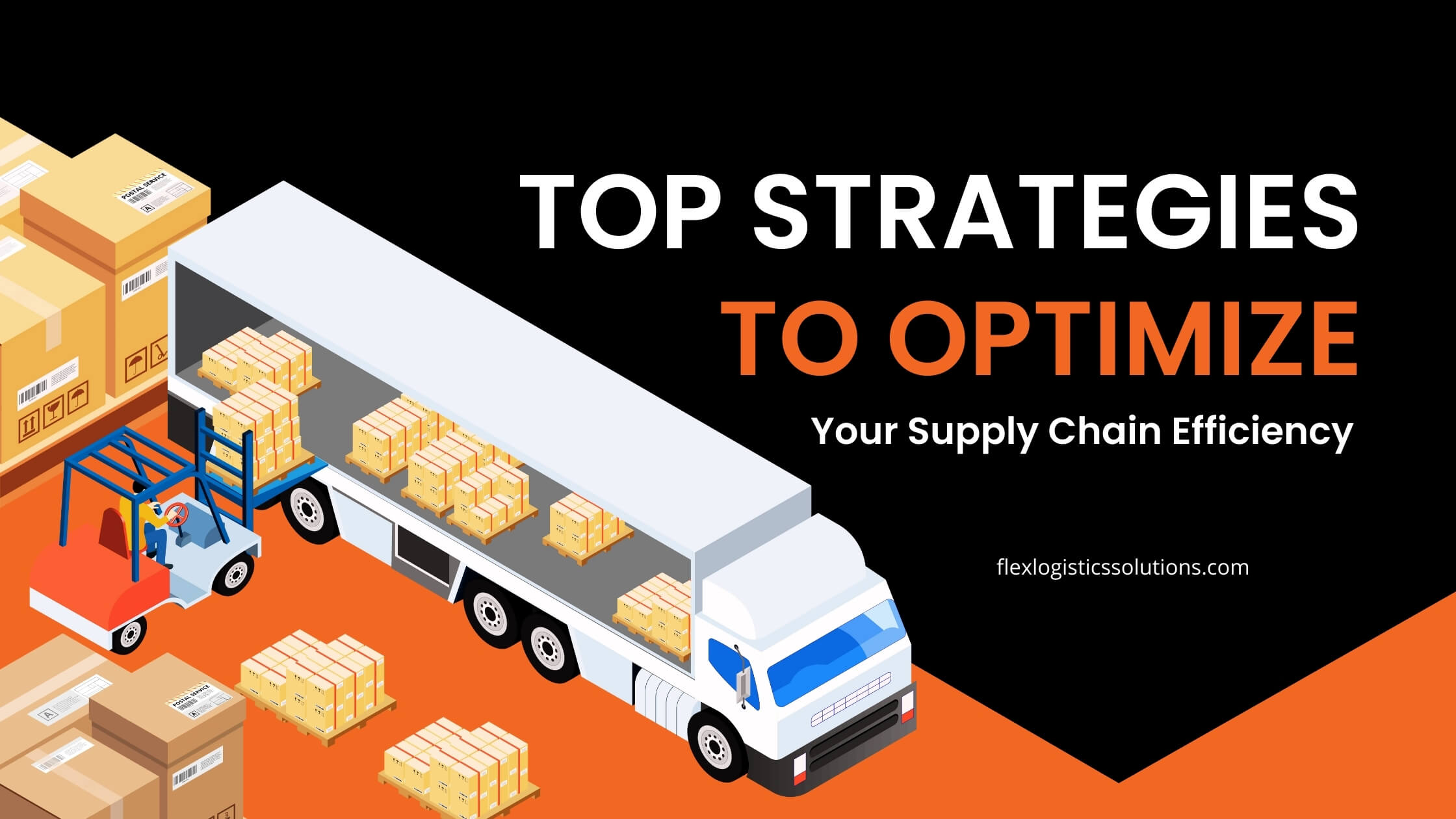
Top Strategies to Optimize Your Supply Chain Efficiency
Achieving supply chain optimization requires a multi-faceted approach. Here are the top strategies to enhance supply chain efficiency:
1. Leverage Advanced Technology
Technology plays a pivotal role in modern supply chain management. From warehouse management systems (WMS) to transportation management systems (TMS), adopting advanced tools enables real-time visibility, data-driven decision-making, and automation.
Benefits include:
- Real-Time Tracking: Monitor shipments, inventory, and orders to respond quickly to disruptions.
- Predictive Analytics: Anticipate demand fluctuations and optimize inventory levels accordingly.
- Automation: Reduce human errors in order processing, inventory management, and shipping.
At Flex Logistics Solutions, we integrate technology into every aspect of the supply chain to provide businesses with actionable insights and enhanced operational efficiency.
2. Optimize Inventory Management
Effective inventory management is crucial for supply chain efficiency. Overstocking increases storage costs and risks obsolescence, while understocking can lead to missed sales and customer dissatisfaction.
Strategies for inventory optimization include:
- Implementing Just-in-Time (JIT) inventory to align supply with demand.
- Using demand forecasting tools to anticipate seasonal trends.
- Categorizing inventory based on turnover rates and prioritizing fast-moving products.
By maintaining optimal inventory levels, companies can reduce costs, improve cash flow, and ensure consistent product availability.
3. Strengthen Supplier Relationships
A strong supply chain relies on reliable suppliers. Establishing strong supplier relationships ensures timely deliveries, quality products, and collaborative problem-solving.
Best practices include:
- Maintaining open and regular communication
- Monitoring supplier performance through metrics like on-time delivery and quality compliance
- Developing strategic partnerships for joint planning and risk mitigation
Through collaboration with Flex Logistics Solutions, businesses can seamlessly coordinate with suppliers to maintain high levels of supply chain efficiency.
4. Implement Flexible Transportation Solutions
Transportation is a major component of supply chain costs and efficiency. Adopting flexible transportation solutions allows businesses to adjust routes, delivery schedules, and modes of transport based on demand, traffic conditions, and customer requirements.
Key benefits include:
- Reduced transportation costs through optimized routing
- Increased reliability and on-time deliveries
- Ability to scale operations during peak seasons
Flex Logistics Solutions provides customized transportation strategies to ensure timely, cost-effective, and adaptable deliveries.
5. Streamline Order Fulfillment
Order fulfillment impacts both customer satisfaction and supply chain efficiency. Delays or errors in processing can disrupt the entire supply chain.
Strategies to improve fulfillment include:
- Automating order processing to reduce human error
- Optimizing warehouse layout for faster picking and packing
- Using cross-docking to minimize storage time and accelerate delivery
Our team at Flex Logistics Solutions works with businesses to streamline fulfillment processes, ensuring accurate and timely deliveries.
6. Measure and Monitor Key Performance Indicators (KPIs)
Monitoring KPIs allows companies to identify inefficiencies and make data-driven improvements. Critical KPIs for supply chain efficiency include:
- On-time delivery rates
- Order accuracy
- Inventory turnover
- Transportation cost per unit
- Lead time and cycle time
By tracking these metrics, companies can proactively address bottlenecks and optimize overall performance.
7. Adopt Lean Supply Chain Practices
Lean principles focus on reducing waste, streamlining processes, and improving efficiency.
Effective lean practices include:
- Eliminating non-value-added activities
- Consolidating shipments to reduce transportation costs
- Implementing continuous improvement initiatives
Flex Logistics Solutions integrates lean methodologies to ensure businesses operate efficiently, reduce costs, and maintain high service quality.
8. Enhance Collaboration Across the Supply Chain
Strong collaboration among stakeholders—including suppliers, manufacturers, distributors, and retailers—is essential for supply chain efficiency.
Ways to enhance collaboration include:
- Implementing cloud-based platforms for real-time data sharing
- Holding regular stakeholder meetings to align objectives
- Integrating systems for automated communication and data exchange
Effective collaboration ensures smooth coordination, minimizes errors, and improves overall supply chain performance.
9. Focus on Risk Management
Supply chains face disruptions from natural disasters, market volatility, or transportation delays. Proactive risk management ensures business continuity and maintains supply chain efficiency.
Strategies include:
- Diversifying suppliers to reduce dependency on a single source
- Maintaining safety stock for critical products
- Developing contingency plans for transportation or production disruptions
Flex Logistics Solutions incorporates risk management strategies into every logistics plan, ensuring businesses remain resilient under all circumstances.
10. Continuous Improvement and Innovation
Supply chain optimization is an ongoing process. Companies must continuously evaluate processes, adopt new technologies, and innovate to maintain supply chain efficiency.
Areas of focus include:
- Upgrading technology for tracking, analytics, and automation
- Reassessing warehouse operations and transportation strategies
- Training staff for operational excellence and adaptability
By partnering with Flex Logistics Solutions, businesses can continuously refine their supply chain processes to remain competitive and efficient.
Industries That Benefit from Optimized Supply Chains
Optimizing supply chain efficiency is valuable across industries, but it is especially critical for:
- E-commerce and Retail: High demand fluctuations require adaptive logistics solutions.
- Healthcare and Pharmaceuticals: Time-sensitive deliveries demand precision and reliability.
- Manufacturing: Just-in-time production requires timely material delivery.
- Food and Beverage: Perishable goods need fast and controlled transport.
- Events and Trade Shows:Temporary and scalable logistics solutions are necessary for success.
By leveraging tailored strategies, businesses in these sectors can achieve smoother operations, lower costs, and better customer satisfaction.
Why Choose Flex Logistics Solutions
Optimizing a supply chain is complex and requires expertise. By partnering with Flex Logistics Solutions, businesses gain access to:
- End-to-end logistics services including warehousing, transportation, and distribution
- Flexible transportation solutions for scalable, adaptable delivery
- Technology-driven solutions for tracking, analytics, and automated operations
- Expert guidance to design strategies that maximize supply chain efficiency
Our commitment is to help growing companies streamline operations, reduce costs, and deliver exceptional service to customers.
Conclusion
Enhancing supply chain efficiency is essential for business growth, profitability, and customer satisfaction. By leveraging advanced technology, optimizing inventory, building strong supplier relationships, implementing flexible transportation solutions, and embracing continuous improvement, companies can streamline operations and maintain a competitive edge.
Partnering with Flex Logistics Solutions ensures access to comprehensive logistics solutions, expert support, and innovative strategies designed to optimize every aspect of the supply chain. In a rapidly evolving market, investing in supply chain efficiency is not just a strategic advantage—it’s the foundation for long-term success.